Why the Counter Is Central to Omakase
In a conventional restaurant, the kitchen is hidden. Food arrives at the table fully formed, with little sense of how it was made or by whom. Omakase works differently. The counter is not a design choice. It is the format itself.
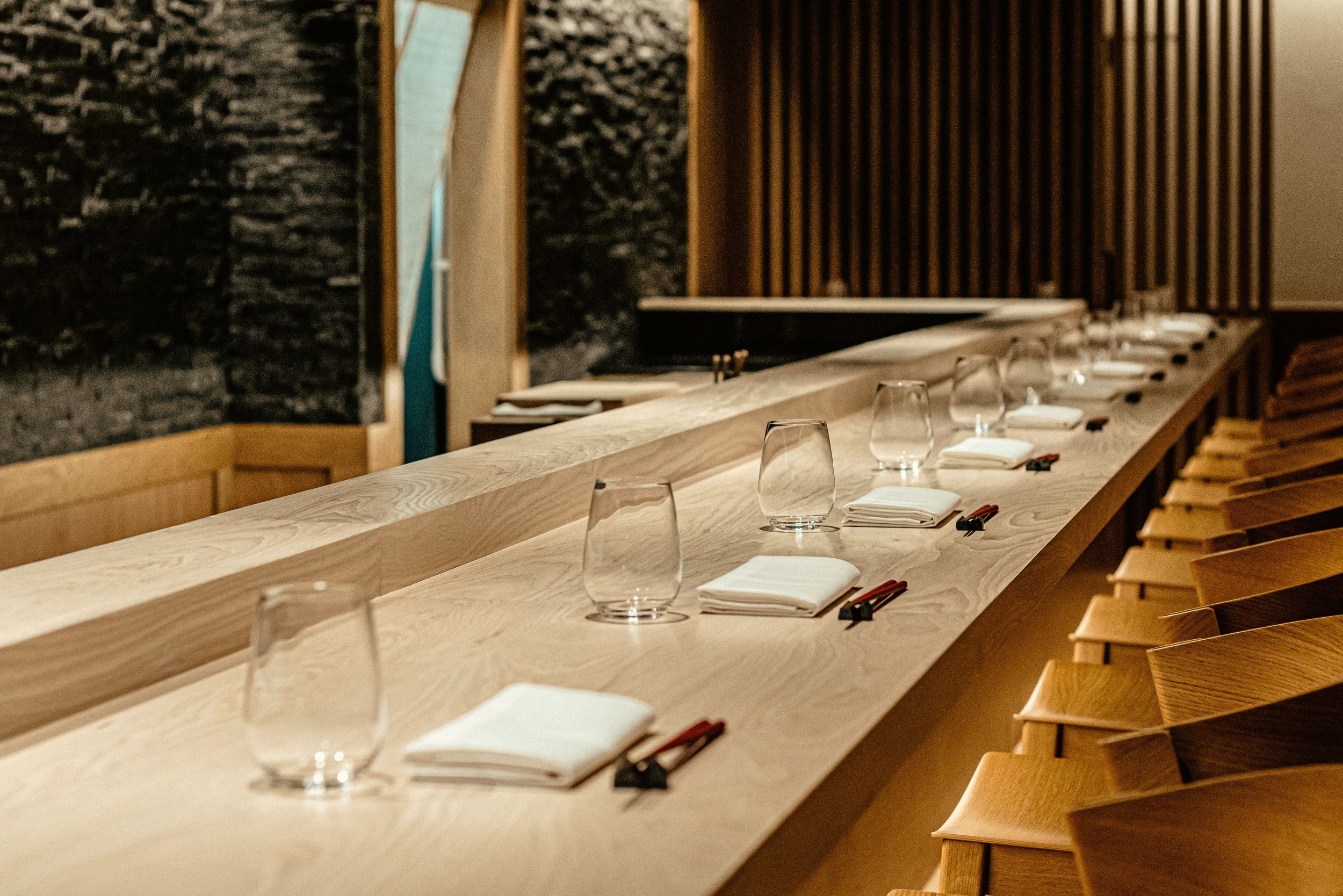
At Sushi Amamoto, the counter seats 16 guests in a single line of pale English Oak, running the length of the room before turning 90 degrees at the end. The wood was chosen deliberately: English Oak, a nod to the local sourcing that runs through the kitchen's philosophy, and a statement about what this restaurant is trying to represent in the UK.
Presence over distance
Seated at the counter, guests are a few feet from the chefs at most. There is no pass, no runner, no intermediary. Each course is placed directly in front of you by the person who made it. That proximity changes how a meal feels. You notice the knife work, the pace, the care taken over each piece. The food arrives with context.
Most omakase counters seat ten guests or fewer, typically with a single sushi chef working the service. Sushi Amamoto seats 16, with two sushi chefs working side by side. That is unusual. A larger counter without additional expertise risks losing the consistency and attention that omakase depends on. The second chef is not a practical compromise; it is what makes the format work at this scale.
The room earns its quiet
The interior does the rest. Natural stone and pale timber keep the space minimal. Soft lighting, a linen noren at the entrance, the kind of atmosphere you find at serious sushi restaurants in Japan. Guests tend to lower their voices without being asked. The room is designed to keep attention on the food.
The two corner seats sit where the counter turns. They suit guests who want a degree of privacy, or groups who want to face each other as well as the counter. It is a small detail, but it reflects how the space has been thought through.
Why it matters
Counter dining at this level is not about spectacle. Watching the chefs work is not entertainment; it is part of understanding what you are eating. The origin of the fish, the way the rice is pressed, the decision to use Hampshire trout in the oshizushi rather than mackerel: these things mean more when you are close enough to see the process.
Omakase asks guests to trust the chef completely. The counter is where that trust is built.
Book your seat at Sushi Amamoto and experience the 16-seat counter in Mayfair.