The Sequence Behind the Menu: How an Omakase is Constructed
An omakase menu is not simply a list of dishes. The best omakase restaurants have a well thought out omakase menu structure, and the sequence is intentional. Every course is set to build flavour gradually, to contrast texture and temperature at the right moment.
At Sushi Amamoto, the Tasting Omakase spans 17 courses whereas the Prestige Omakase spans around 22 courses. Here is how that journey is structured, and why.
Opening dishes
The omakase menu structure begins with tsumami, small seasonal appetisers that ease the guest in and to create an appetite. Light, varied, and deliberately restrained. Starting heavy would compromise everything that follows.
Sashimi follows, allowing the fish to be experienced cleanly before rice is introduced. It is also a moment of simplicity after the variety of the tsumami, a reset before the menu begins to build.
A warm or grilled course introduces the first shift in temperature and texture, contrasting with the cold dishes . Raw fish served continuously, however good, benefits from contrast.
On the Prestige menu, two of Sushi Amamoto's signature dishes sit here. The grilled mochi with N25 caviar and nori arrives first: a single crisp bite of binchotan-grilled rice cake, topped with caviar and wrapped in nori. The foie gras monaka follows later in the sequence, after the tuna nigiri, a rich and refreshing dish shortly before moving onto the closing phase.
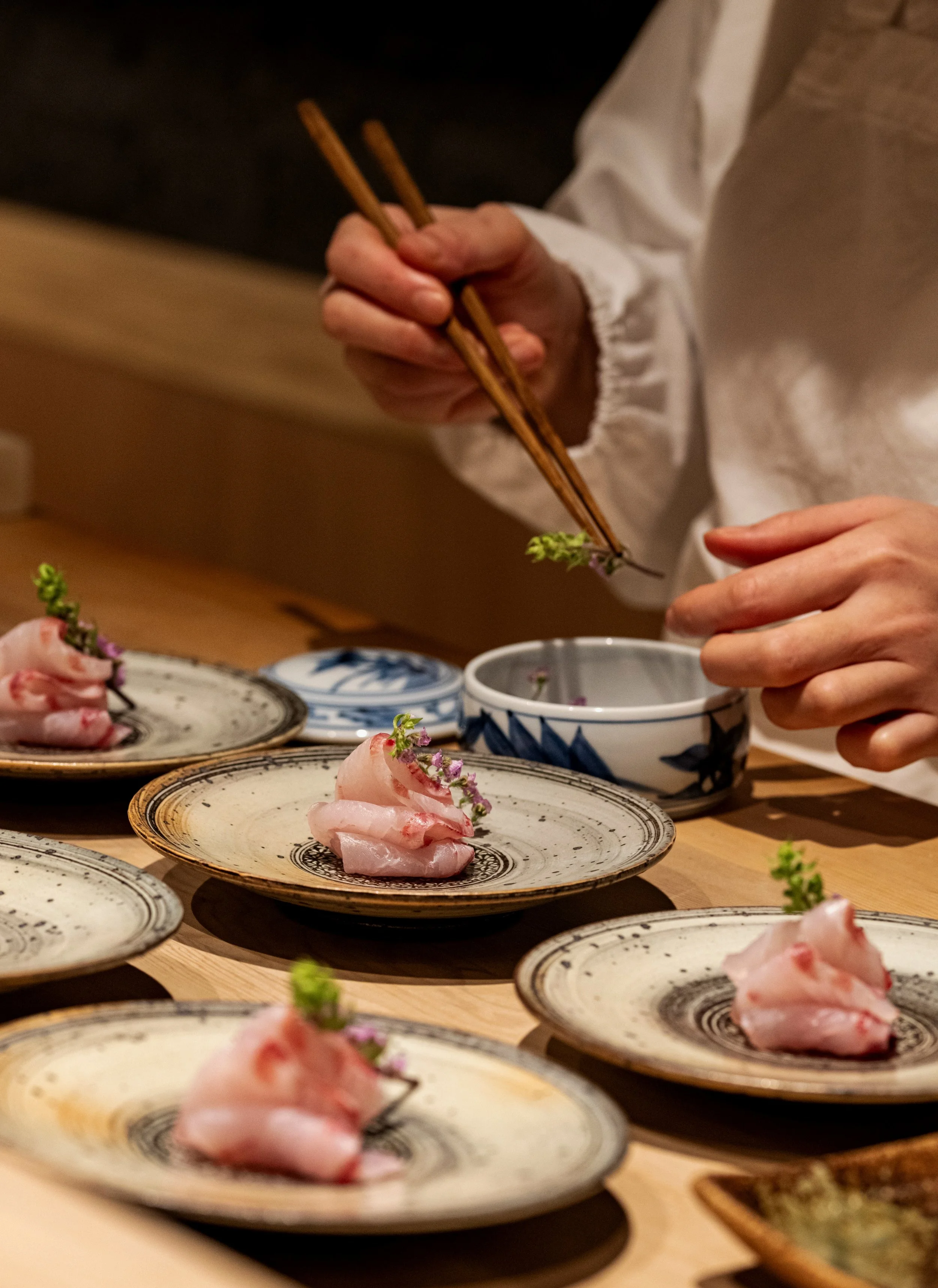
Seabream Sashimi with hanaho
The nigiri sequence
Nigiri follows its own internal logic within the omakase menu structure, where many of the best omakase restaurant follows. It begins with delicate white fish that is less oily such as turbot and seabream, moves through medium-flavoured fish like hamachi and prawn, and builds toward the richest cuts of bluefin tuna. Akami comes first, then chutoro, then otoro. The sequence is deliberate: serving the richest fish early would make everything that followed feel flat. A warm dish such as tempura is introduced mid-sequence as a break, offering contrast and refreshing the palate before the final stretch.
Closing phase
The oshizushi arrives as the nigiri concludes. At Sushi Amamoto, this is the Hampshire trout pressed sushi, cured in-house and wrapped in konbu. It is a composed, structured course that marks the transition out of the nigiri sequence. A soup follows, warm and delicate, before the meal moves into dessert.
Dessert
Desserts at Sushi Amamoto are seasonal. A recent example: strawberry pavlova with yuzu fromage blanc cream, fresh strawberry and rhubarb, finished with an umeshu sorbet. Light and a clean close to a long meal.
Book your seat at Sushi Amamoto and experience the best Omakase in London.